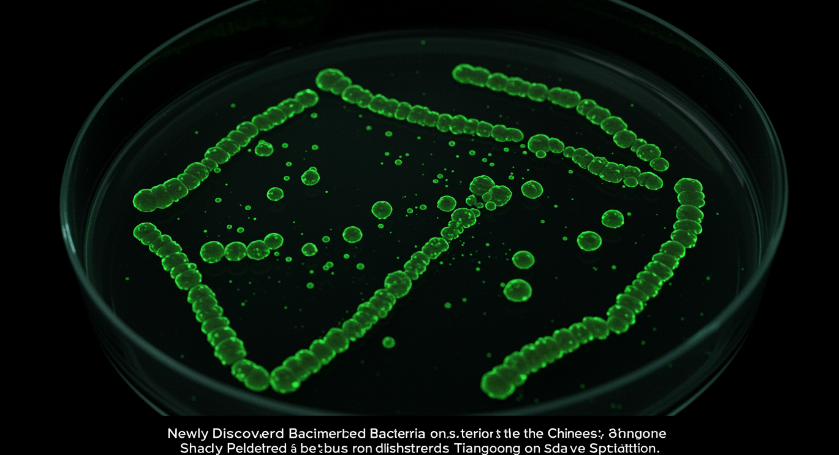
In a groundbreaking development for space microbiology, scientists have identified a previously unknown bacterial strain aboard China’s Tiangong space station. The discovery marks the first time a novel microorganism has been found in the controlled environment of a long-term orbital habitat and raises intriguing questions about microbial adaptation beyond Earth.
Discovery in Orbit
The bacteria were discovered during routine environmental monitoring conducted by the crew of the Tiangong station as part of standard health and safety protocols. Samples collected from interior surfaces were returned to Earth aboard a recent resupply mission and analyzed by a team of microbiologists at the Chinese Academy of Sciences.
Initial genetic sequencing revealed that the organism does not match any known bacterial species in existing global databases. Researchers have temporarily classified it under the genus Staphylococcus , but further analysis is ongoing to determine its precise taxonomic placement.
Unique Characteristics
Preliminary studies suggest the bacteria possess unique adaptive traits that may be linked to the microgravity and high-radiation conditions of low Earth orbit. Notably, the strain exhibits enhanced biofilm formation — a protective mechanism that allows microbes to adhere to surfaces and resist disinfectants more effectively than their terrestrial counterparts.
Importantly, early tests indicate that the bacteria are not pathogenic to humans, though researchers caution that continued study is necessary to understand any potential risks, especially for future long-duration missions to the Moon, Mars, and beyond.
Implications for Space Exploration
This discovery underscores the evolving nature of microbial life in space environments. Scientists have long known that microbes can survive — and even thrive — in extreme conditions, but finding a completely new species aboard a human-occupied spacecraft highlights the importance of monitoring microbial ecosystems in extraterrestrial habitats.
Dr. Li Wenjun, a leading astrobiologist involved in the study, noted, “This is more than just a scientific curiosity. It tells us that life adapts in ways we don’t yet fully understand when removed from Earth’s biosphere. Understanding these adaptations will be key to ensuring crew health and the success of future interplanetary missions.”
Next Steps
Chinese space authorities have announced plans to conduct follow-up experiments aboard Tiangong to study how the bacteria grow and evolve in real-time under spaceflight conditions. Additionally, international collaborations are being explored to include the new strain in the growing database of space-adapted organisms.
NASA and the European Space Agency (ESA) have expressed interest in the findings, emphasizing the importance of transparency and shared research in advancing humanity’s understanding of life beyond Earth.
Conclusion
The identification of a novel bacterial strain aboard Tiangong represents a significant milestone in space science. As humans prepare for deeper space exploration, understanding how life changes in orbit — both at the macro and microscopic levels — will be crucial for building sustainable habitats far from Earth.
 Tech News FYP
Leave a comment