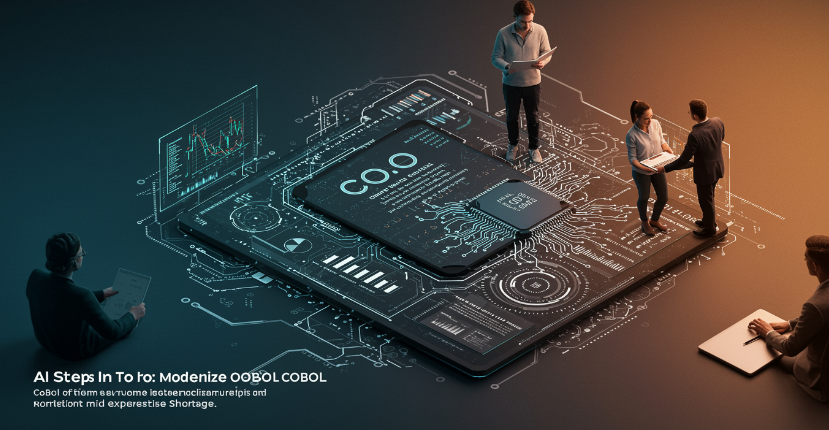
Introduction: The Role of AI in COBOL Modernization
COBOL (Common Business-Oriented Language), a programming language developed in 1959, remains the backbone of many critical systems across industries such as banking, government, and insurance. Despite its reliability and robustness, COBOL systems face significant challenges due to their age, complexity, and the dwindling pool of skilled programmers proficient in this language. As veteran developers retire and documentation for these legacy systems becomes scarce, organizations are increasingly turning to Artificial Intelligence (AI) to modernize their COBOL-based infrastructures[1] [2].
AI has emerged as a transformative tool capable of automating code analysis, identifying inefficiencies, translating COBOL into modern programming languages like Java or Python, and even generating updates. This approach not only reduces costs but also accelerates modernization efforts while preserving the functionality of mission-critical systems[3].
Why COBOL Systems Persist
Despite being over six decades old, COBOL systems continue to operate because they are deeply embedded in essential services. For example:
- Banking: Many financial institutions still rely on COBOL for transaction processing.
- Government Services: Programs like Social Security and unemployment insurance depend on COBOL-based mainframes.
- Reliability: These systems have proven their robustness over time.
Replacing these systems outright is often impractical due to the high costs involved and the risk of disrupting operations. Additionally, many organizations lack comprehensive documentation for their legacy systems, making modernization efforts more complex[4] [5].
Challenges in Modernizing COBOL Systems
Modernizing legacy COBOL systems presents several challenges:
- Lack of Skilled Programmers: The number of developers proficient in COBOL is rapidly declining as older programmers retire[6].
- Poor Documentation: Many legacy systems were built decades ago with little or no documentation available today[7].
- Complexity of Codebases: Some systems contain millions of lines of code that must be carefully analyzed and understood before any changes can be made[8].
- Risk of Errors During Transition: Misinterpretation by AI tools or human oversight errors can introduce bugs into critical applications[9].
These challenges necessitate a careful balance between automation through AI tools and human expertise.
How AI Is Addressing These Challenges
AI offers several solutions to overcome the hurdles associated with modernizing outdated COBOL systems:
1. Automated Code Analysis
AI-powered tools can analyze millions of lines of legacy code quickly and identify areas that require updates or optimization. For instance:
- IBM’s Watsonx Code Assistant for Z uses generative AI to refactor COBOL code into modern languages like Java while preserving business logic[10].
- Amazon Q Developer leverages machine learning models to automate documentation creation and streamline code translation processes[11].
2. Translation Into Modern Languages
One key application of AI is converting COBOL into contemporary programming languages such as Python or Java without losing functionality. This ensures that organizations can transition away from outdated platforms while maintaining operational continuity[12].
3. Bridging Documentation Gaps
AI tools can generate missing documentation by analyzing existing codebases and creating detailed descriptions of system functionalities. This helps new developers understand how the system operates without relying solely on retiring experts[13].
4. Enhancing Security During Modernization
Legacy systems often lack modern security protocols. AI-driven modernization efforts incorporate updated encryption methods and access controls during the transition process to ensure data integrity[14].
Risks Associated With Using AI for Modernization
While AI provides significant advantages in modernizing legacy systems, it also introduces certain risks:
- Misinterpretation Risks: AI may misinterpret complex business logic embedded within legacy code if training datasets are incomplete or insufficiently representative[15].
- Security Concerns: As sensitive data passes through AI tools during modernization efforts, there is a risk that vulnerabilities could be introduced inadvertently[16].
- Dependence on Human Oversight: Despite advancements in automation, human intervention remains crucial to validate outputs generated by AI models and ensure accuracy[17].
To mitigate these risks, rigorous testing protocols must be implemented alongside human-in-the-loop approaches.
Case Studies: Successful Applications of AI in Legacy System Modernization
Example 1: U.S Government Agencies
During the COVID-19 pandemic, states like New Jersey faced overwhelming demand on their unemployment insurance platforms—many powered by aging COBOL mainframes. IBM introduced generative AI solutions capable of translating portions of these mainframes into more scalable architectures like cloud environments without disrupting services[18].
Example 2: Department Of Defense (DoD)
The U.S Air Force utilized generative AI models to refactor its mission-critical applications from COBOL into Java successfully while maintaining operational reliability throughout deployment phases[19].
Conclusion: The Future Role Of AI In Legacy System Transformation
AI’s role in modernizing outdated COBOL systems is both promising and transformative but requires careful implementation strategies that balance automation with human oversight:
- Organizations must invest not only in advanced AI tools but also in training programs for employees transitioning from traditional development roles.
- Collaborative initiatives like The Zorse Project aim at improving access to open-source datasets necessary for training effective generative models tailored specifically toward mainframe environments.
As industries continue adopting iterative modernization approaches rather than abrupt overhauls—leveraging both human expertise alongside cutting-edge technologies—the future appears brighter for transitioning away from reliance upon aging infrastructures while safeguarding critical services globally.
 Tech News FYP
Leave a comment