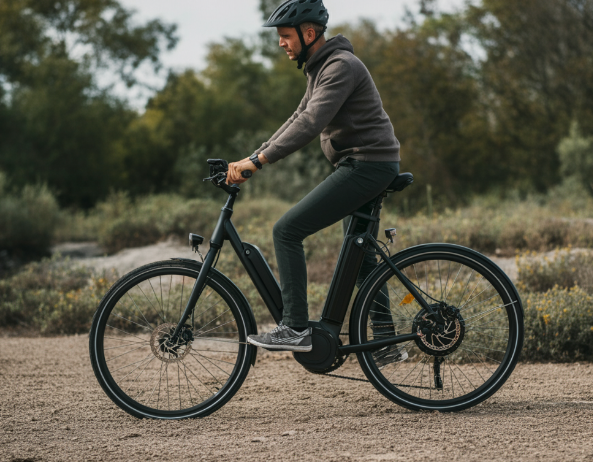
Transport for London (TfL) has announced a ban on non-folding e-bikes across most of its public transport network, effective from March 31, 2025. This decision stems from safety concerns over the fire risks associated with certain types of e-bikes, particularly those modified using conversion kits or equipped with uncertified batteries. The ban applies to services such as the London Underground, Overground, Elizabeth Line, and Docklands Light Railway (DLR).
The move follows several incidents involving e-bike fires on TfL premises, including a notable case at Rayners Lane station in February 2025 where an e-bike caught fire on the platform. These incidents have raised alarms about the potential dangers posed by lithium-ion batteries used in e-bikes, especially when they malfunction or are improperly maintained.
Why Are Non-Folding E-Bikes Banned?
The primary reason for this restriction is the fire risk posed by non-folding e-bikes, particularly those that have been modified using electronic conversion kits. According to TfL and the London Fire Brigade:
- Conversion Kits: Many standard bicycles are converted into e-bikes using aftermarket kits that often include uncertified or low-quality batteries and chargers. These components are more prone to overheating and catching fire.
- Lithium-Ion Batteries: Fires caused by lithium-ion batteries can be sudden, intense, and produce toxic smoke. Such fires are difficult to control and pose significant risks in confined spaces like trains or platforms.
- Safety Incidents: In addition to the Rayners Lane incident, there was another fire at Sutton station in March 2024. Both cases involved non-foldable e-bikes.
While purpose-built e-bikes from reputable manufacturers generally meet safety standards, it is challenging for enforcement officers to distinguish between safe models and potentially hazardous modified bikes. As a result, TfL has opted for a blanket ban on all non-folding e-bikes until improved product safety regulations are introduced.
Exemptions: Folding E-Bikes
Folding e-bikes are exempt from the ban because:
- They are less likely to have been modified with conversion kits due to their specific design constraints.
- There have been no reported incidents of folding e-bike fires in London.
- Their compact size makes them easier to handle during emergencies or evacuations.
This exemption benefits manufacturers like Brompton and Gocycle, which specialize in foldable models.
Enforcement Measures
TfL plans to enforce this ban through its team of 450 uniformed officers deployed across the network. Passengers found carrying non-foldable e-bikes may face:
- Refusal of entry,
- Removal from services,
- Fines up to £1,000 if prosecuted under TfL bylaws.
Broader Implications
Safety Concerns
The London Fire Brigade has reported an average of one fire every other day involving either an e-bike or an e-scooter in recent years. In 2023 alone:
- There were 143 fires caused by e-bikes in London.
- Many incidents were linked to faulty batteries purchased online or through unregulated marketplaces.
Deputy Commissioner Charlie Pugsley emphasized that these fires can be “sudden” and “incredibly ferocious,” producing highly toxic smoke that endangers passengers and staff alike.
Impact on Sustainable Transport
Critics argue that this ban could hinder efforts to promote sustainable transportation in London. James Metcalfe, co-founder of Volt Bikes, described it as a “huge setback” for active travel initiatives. He suggested that instead of imposing blanket restrictions, authorities should focus on:
- Educating consumers about safe purchasing practices,
- Regulating online marketplaces selling substandard products,
- Establishing a national database for legal and certified e-bike models.
Cycling advocates also warn that reduced access for legitimate users could discourage cycling as part of multimodal commutes.
Future Steps
TfL has committed to working with government agencies and industry stakeholders to improve product safety standards for batteries, chargers, and conversion kits used in e-bikes. Key recommendations include:
- Stricter regulation of online sales platforms,
- Mandatory third-party certification for all battery-powered devices,
- Enhanced consumer awareness campaigns about safe charging practices.
Additionally, TfL will review its policies periodically based on advancements in product safety measures.
In summary, starting March 31, 2025, Transport for London will prohibit non-folding e-bikes on most public transport services due to fire risks associated with lithium-ion batteries—particularly those used in modified bikes with uncertified components—while allowing folding models as a safer alternative.
 Tech News FYP
Leave a comment